

The Right Role for Agentic AI in Security Operations

As cybersecurity teams assess where agentic AI can deliver practical value, the conversation is moving beyond experimentation and into operational design. According to the Cyber Security Tribe Annual Report, based on a survey of 455 cybersecurity practitioners conducted between December 2025 and January 2026, 73% of respondents said their organizations are already using or developing agentic AI within cybersecurity, which increased from 59% in the previous year. That finding reflects both growing confidence in autonomous capabilities and growing concern about how far those capabilities should go inside security operations.
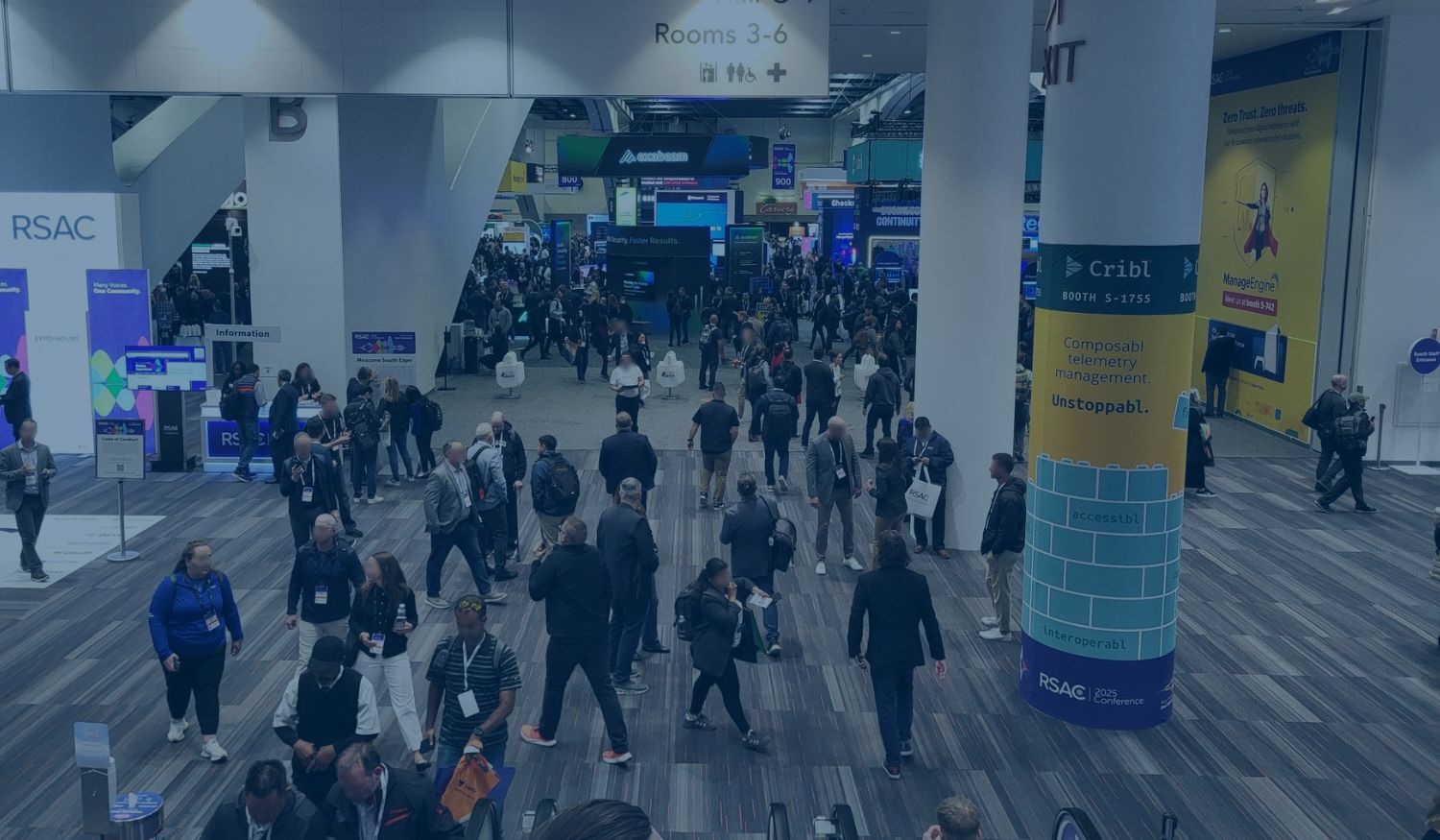
To dig deeper into the subject and explore growing confidence and concerns in autonomous capabilities, Cyber Security Tribe asked senior cybersecurity experts and industry thought leaders at RSAC 2026: “With agentic AI rapidly entering security operations, where does autonomous decision-making add strategic advantage, and where does it introduce unacceptable systemic risk?” Their responses form part of a broader article series built around the annual report’s data and themes. Across the series, we asked leaders for their perspective on issues including agentic AI, AI governance, quantum computing, employee concerns, and the top areas attracting security investment.
This article focuses specifically on the boundary between useful autonomy and harmful overreach. It explores where autonomous systems can strengthen security teams by improving speed, consistency, triage, investigation support, and operational efficiency. It also highlights where organizations must apply greater caution, especially when decisions carry wider business consequences, affect core infrastructure, alter access, or create the potential for cascading errors at scale.
For security leaders, the central issue is not whether autonomous decision-making will play a role in modern operations. It is how to define the limits, controls, and accountability needed to make that role effective, measurable, and safe. The expert perspectives that follow offer a grounded view of where agentic AI belongs in security today, and where human judgment must remain firmly in place.
Thought leaders who contributed to the article include:
Anurag Gurtu, CEO, Airrived
Autonomous decision-making creates strategic advantage wherever speed, scale, and pattern recognition exceed human capacity particularly in high-volume, rules-dense, time-sensitive environments. In security operations, this includes alert triage, policy validation, configuration enforcement, vulnerability prioritization, and coordinated response workflows. In these domains, autonomous systems reduce cognitive overload, eliminate latency, and apply consistent logic across vast data surfaces. The result is not just faster MTTD or MTTR it is operational resilience at machine scale.
However, autonomy becomes risky when deployed without context boundaries, governance scaffolding, or reversibility. Strategic risk emerges when systems act across ambiguous domains, make irreversible business-impacting decisions, or operate without audit trails. The danger is not autonomy itself rather unbounded autonomy.
The future is not human vs. machine. It is governed autonomy where agentic systems execute within clearly defined trust zones, escalation thresholds, and explainability frameworks. Strategic advantage comes from designing autonomy intentionally, not from maximizing it indiscriminately.
Stephanie Schneider, Cyber Threat Intelligence Analyst, LastPass Threat Intelligence, Mitigation and Escalation (TIME) team.
Most attacks are expected to be primarily autonomous within a couple of years, and defenses must match this pace to effectively counter them. In that race, agentic AI gives security teams a huge boost when it handles the fast, repetitive work humans simply can’t keep up with and frees up bandwidth to focus on complex investigations instead.
When you’re buried in alerts and noisy signals, AI can step in to triage and take small, low‑risk actions on items that are high-frequency, low-risk, and time sensitive to help security teams stay ahead of attackers who are already operating at machine speed. The danger comes when AI is allowed to make big, irreversible decisions that depend on nuanced human judgement, like changing core configurations, shutting down essential systems, or acting on a misread pattern.
AI that can modify core infrastructure, disable business‑critical systems, or enforce broad policy changes may amplify errors or adversarial manipulation. One wrong move can create a bigger problem than the attack itself. The risk becomes unacceptable when AI decisions affect foundational security controls, trust boundaries, or organizational continuity. It’s all about finding the right balance: let AI accelerate the quick, safe actions, but keep humans responsible for the choices with real consequences.
Kevin Paige, Field CISO at ConductorOne
The strategic advantage is clearest where speed matters and the decision space is well-defined. Alert triage is the obvious example — security teams are drowning in alerts, most of which are false positives. An AI agent that can correlate signals across multiple data sources, assess context, and prioritize the alerts that actually require human attention is transformative. It doesn't replace the analyst, it removes the noise so the analyst can focus on what matters.
Access lifecycle management is another area. Provisioning and deprovisioning accounts, conducting access reviews, flagging anomalous permissions — these are high-volume, rules-based tasks where AI agents can operate faster and more consistently than humans.
Where it introduces unacceptable risk is anywhere the decision has irreversible consequences or requires judgment that depends on context, the model doesn't have. Autonomously revoking access during a suspected incident sounds efficient until the agent misclassifies a legitimate workflow and shuts down a revenue-critical system. Autonomously approving elevated access sounds fast until the agent can't distinguish between a routine request and a compromised account escalating privileges.
The line isn't between "AI can do this" and "AI can't do this." It's between decisions where being wrong is recoverable and decisions where being wrong creates cascading damage. Organizations that draw that line clearly and enforce it through policy will get enormous value from agentic AI. Organizations that let agents accumulate authority without boundaries will learn expensive lessons.
Chris Camacho, COO and Co-founder of Abstract
Autonomous systems help most when they take on the work that slows security teams down today. Security operations centers are flooded with alerts, logs, and fragmented signals. A large portion of an analyst’s day is spent gathering context, correlating information across tools, and deciding whether something is worth investigating. Systems that can automatically enrich alerts, correlate signals, and assemble investigation paths can dramatically reduce that friction. That is where autonomy creates real value. It shortens the time between detection and understanding and allows analysts to focus on judgment rather than data collection.
The risk appears when automation moves from assistance to authority. Security environments are messy. Data can be incomplete, signals can be misleading, and systems are often tightly interconnected in ways that are not obvious. If an autonomous system begins making high-impact decisions on its own, blocking access, shutting down services, or suppressing alerts, the blast radius of a mistake can quickly grow beyond security into business operations.
The safest model is controlled autonomy. Let systems investigate, organize information, and recommend actions, but reserve high-impact decisions for people. Clear permission boundaries, detailed logging, and defined escalation paths ensure automation accelerates the team without taking control away from it. The goal is not to replace analysts. It is to remove the repetitive work that prevents them from doing their most important job: making informed decisions about real threats.
Chip Witt, Security Evangelist at Radware
Agentic AI shines when it takes on the work that usually drags security teams down. High volume investigations, early stage triage, routine containment, and control checks are all areas where an automated agent can move faster than any human without putting the business at risk. When you offload that grind, analysts get more time to tackle the investigations that actually need creativity and judgment.
The trouble starts when an agent is allowed to make decisions that affect the core of the business. If an autonomous system can change identity settings, modify production infrastructure, or interrupt revenue producing services, you are betting the company on its interpretation of context. All it takes is one misread signal or one adversarial push for things to spiral. Autonomy is a great accelerator for low risk work, but it becomes a liability when the consequences are hard to reverse.
Eric Avery, Global Head of Infrastructure and Data at Sumo Logic
From a security architecture standpoint, autonomous decision-making offers the most strategic value when the agentic AI is deterministic, constrained, and context-bound—particularly when it operates at the data layer with well-defined access and trust boundaries. When an AI agent is trained and configured for a single, tightly scoped security function, such as continuous policy enforcement, privilege validation, or anomaly detection under Zero-Trust principles, it effectively becomes a high-speed decision engine capable of anticipating and counteracting threats faster than human analysts can. So long as traceability and logging are verbose, the determinism inherent in such constrained systems means we can audit every decision, validate outcomes, and make predictable adjustments as the environment evolves.
The risk emerges when organizations attempt to extend autonomy into less deterministic, multi-step, or probabilistic security contexts, such as adaptive incident response, root-cause analysis across heterogeneous systems, or automated threat hunting that requires contextual interpretation. In these scenarios, too many unknowns combine: unverified data streams, model drift, and emergent behaviors from loosely coupled agents.
Additionally, it is key to remember that AI capability consistently outpaces architectural guardrails and governance frameworks. A model or agent acting beyond its scope of authority can unintentionally amplify an attack surface, altering network states, misclassifying privileged entities, or disrupting continuity under the assumption of correctness. Strategic advantage is about control: anchor autonomy at the deterministic layer, surround it with Zero-Trust evaluation, and never delegate final authority on probabilistic or human-context decisions until guardrails mature to match innovation velocity.
Finnbogi (Bimbi) Finnbogason, Chief Technology Officer (CTO) and Co-founder and Head of Varist Threat Labs
As we observe attacks growing in volume, there is a clear advantage to leveraging agentic AI to drive more efficient playbooks and gain faster decision-making in security operations. The most severe risk to consider is when the AI agent erroneously closes an alert as noise or a false positive, giving an attacker more dwell time.
A subtler but equally important risk is when the playbooks feeding the agent carry insufficient context and metadata to support accurate decisions. This isn't a failure of the AI agent itself — it's a limitation of the analysis tools used to enrich the alert upstream. An agent can only be as good as the signal it's given. That's why high-fidelity, fast file analysis is a governance capability as much as a detection capability.
AI agents are also trained to recognize known TTP patterns and signals, but they have less chance of identifying novel threats. They are optimized toward reducing alert fatigue and can develop a bias toward dismissing alerts quickly, even genuine ones, if closure speed or volume reduction is implicitly rewarded.
Willie Tejada, GM & SVP, Aviatrix
Here’s what keeps me up at night: AI agents don’t come through the firewall. They move laterally across the cloud network at machine speed and most organizations have zero visibility into that movement. That’s the systemic risk. The strategic advantage is real, machines can correlate signals and isolate compromised workloads far faster than humans, but only when the network enforces boundaries.
The risk emerges when autonomy operates without clear boundaries. If an AI agent has broad, implicit trust across identity systems, cloud APIs, SaaS platforms, and internal networks, then a compromised agent becomes a force multiplier for an attacker.
Autonomy works when the cloud network enforces boundaries, not when we hope the agent behaves. Access must be tied to workload identity. Lateral movement must be segmented at the network layer. The future is controlled autonomy and the cloud network is where that control must live.
Shashi Kiran, Chief GTM Officer, Nile
This depends on the degree of confidence that an organization in areas they’re comfortable in automating. It’s always good to start from a place where patterns can be established with confidence, human contribution is relatively menial, and the risk of that decision is minimal, and build up from there to situations where patterns are based on actively learning and intelligent decisions.
Every organization has to map their journey to autonomous operations from, say, a Phase 1 to Phase 5 milestone, where the complexity and impact are mapped out and approach this as a graded journey.
Agentic AI being applied to distill signals from noise to pass it to human operators in a NOC or SOC context, is one such area, where autonomous decision making can be built on existing data and known patterns, evolving to situations where new data and patterns are learnt and acted upon in real-time.
Eventually the operator must have high confidence in the action, and be able to root cause deviations quickly. Taking a human augmented approach and understanding the inherent complexity and standard deviations can minimize risk.
John Cannava, CIO at Ping Identity
Agentic AI can deliver real strategic advantage in security operations, but only if autonomy is applied with the same rigor as humans. Autonomous decision-making adds the most value in high-volume, low-ambiguity tasks with clear guardrails. AI agents can triage alerts, enrich incidents, assemble evidence, and execute tightly scoped, reversible containment actions far faster than humans. Because agents can reason and dynamically adapt over time, unlike traditional static automation, they can evolve investigations based on what they uncover. This makes security teams significantly more efficient, especially when agents handle repetitive operational work and allow humans to focus on complex judgment calls.
However, systemic risk emerges when autonomy is poorly governed and not continuously verified. One of the most dangerous patterns is allowing AI agents to impersonate users by reusing their credentials. AI agents should not simply take a user’s ID and password and log in on their behalf. Doing so effectively mirrors the screen-scraping practices once common in the banking industry, where third parties used customer credentials to access bank accounts directly. That approach introduced significant security risks. If this issue is not properly addressed, AI agents could replicate this pattern at a vastly greater scale, amplifying those risks exponentially.
As organizations deploy tens or hundreds of thousands of digital workers, those agents must have identities of their own, with authentication, least privilege, and auditability. Autonomy creates advantage when it is constrained, attributable, and reversible. It becomes unacceptable when it erodes identity boundaries or introduces high-blast-radius decisions without human oversight.
Justin Foster, Forescout CTO
Autonomous decision-making provides a strategic advantage when it helps defenders operate faster and more effectively against attackers (who are using AI themselves to scale and adapt their efforts). In security operations, that speed matters greatly.
Where it introduces unacceptable risk is when the organization cannot verify the decision and having humans approve of significant decisions not aligned with existing automation policies, for example if automatic device isolation presents risks to uptime. Once AI agents are involved, the questions become very basic but very important: who executed the action, how was it derived, and does it reflect reality or a sophisticated hallucination?
If those answers are unclear, the risk rises quickly, particularly when agentic workflows can misread prompts, execute malicious instructions, or drift beyond their intended scope. Agentic AI helps accelerate operations, but humans in a supervisory position are needed for key decisions.
Atif Ghauri, President & Chief Operating Officer, UltraViolet Cyber
Agentic AI adds the most strategic value when autonomy is applied to decisions that are high-frequency, time-sensitive, and reversible. In day-to-day security operations, that includes reducing noise, correlating weak signals across identity, endpoint, and cloud, enriching alerts with context, building an investigation narrative, and executing tightly scoped playbooks. The win is speed with consistency—24/7 triage, fewer missed handoffs, and faster containment when minutes matter. Done well, it also elevates analysts by shifting them from repetitive alert handling to higher-value work such as threat hunting, root-cause analysis, and control improvement.
Autonomy becomes unacceptable when it expands faster than governance, or when an agent can take actions with broad business impact. Anything with a large blast radius—mass account lockouts, wide network segmentation changes, modifications to production infrastructure, deletion of evidence, or automated decisions tied to legal or regulatory obligations—introduces systemic risk. Agentic systems can fail in non-linear ways: incorrect assumptions, cascading remediation loops, or being steered by adversarial inputs. When high privilege is paired with high connectivity, a single wrong decision can propagate across environments before a human can intervene.
The practical approach is graduated autonomy: start in read-only and recommendation modes, then move to constrained actions with clear preconditions, rate limits, and rollback. Autonomy is powerful, but only when impact is bounded and performance is continuously proven.
Roy Akerman, Head of Cloud and Identity Security at Silverfort
AI agents are quickly becoming extensions of individuals, organizations, and even governments. We already see AI agents researching information, managing communications, booking services, and assisting with operational decisions. Attackers are adopting the same model, and in many cases, they are already ahead. There are already agentic attackers operating at scale, using automation and AI to probe environments, exploit identities, and move laterally faster than any human team could respond. Security simply cannot afford to lag. When adversaries operate at machine speed, defenders must respond with the same level of autonomy.
Autonomous decision-making provides a strategic advantage in areas that require real-time, high-volume analysis, such as evaluating authentication requests, analyzing privileged activities, correlating attack signals, and detecting anomalies across massive environments. These capabilities restore the defender’s ability to match the adversary’s speed and scale. At the same time, today’s AI agents remain vulnerable to manipulation, prompt injection, and supply-chain compromise, meaning a security agent itself could become a Trojan horse. The practical path forward is supervised autonomy: AI handles the majority of operational security actions, often 70–80%, while humans remain in the loop for high-impact or sensitive decisions. The bottom line is simple: if attackers deploy autonomous agents, defenders must deploy them as well, only with stronger guardrails and oversight.
Albert Ziegler, Head of AI at XBOW
Autonomous reasoning making delivers a strong tactical advantage in payload crafting and in trawling through large volumes of output. Autonomous decision-making operates one level higher: it creates a strategic advantage in exploration, creative approaches across attack types, and dynamic prioritization of targets. That’s where agentic systems really outperform traditional tools -- they don’t just execute tests, they decide what to test next.
But this same capability introduces unacceptable systemic risk when autonomy is used without strict controls -- specifically when systems are allowed to:
- Commit beliefs as knowledge without validation, or
- Take actions that are irreversible or insufficiently constrained.
Melissa Bischoping, Sr Director, Security & Product Design Research, Tanium
Autonomous IT lets organizations keep up with the scale and complexity of modern IT without scaling staff at the same pace. Technical teams have long been buried in alerts, data, and tools; autonomous IT is what makes high-fidelity decision-making and investigations possible without crushing cognitive load.
Done right—on high-fidelity data and with robust governance—agentic workflows handle the repetitive work and propose candidates for automation, without the anxiety of black-box “set-it-and-forget-it” automation that can cause production outages or action on low-confidence findings.
Bad actors are obviously using AI to shorten exploit cycles, much like defenders are using AI to shorten their time-to-detect. Defensive AI must operate at equal or greater speed. Real-time endpoint data is what turns AI from theoretical advantage into measurable security impact. As dwell time decreases, matching pace with the adversary is a requirement for modern incident response and threat hunting.
Curt Aubley, Chief Executive Officer/Co-Founder at Sevii
With the current potential of agentic AI, I’d frame organizational risk at two levels.
First, calling it what it is, the AI train has left the station, and not just for good guys. Data shows that AI attacks have jumped by nearly 90%, occurring every 30 seconds, and the speed of success has jumped by 65%, with actor goals being achieved in as little as 29 minutes or less. This of course is against a backdrop of wildly overburdened teams and reduced resources, so to not take advantage of AI thinking and reasoning is essentially an admission of defeat. Additionally, while AI co-pilots can balance the workload somewhat, it’s simply delaying the inevitable as teams are still underwater and threats are accelerating linearly.
The practical starting point for autonomous AI is understanding your own security workload. How many cases does your security team handle? Where is this work coming from (e.g. endpoint detections, SIEM alerts, etc.)? Which assets generate the most operational work? With this information, you can implement governance that will help do the work that matters for the security team and is of lowest risk.
That being said, taking on autonomous AI decision making is a big leap from automated AI co-pilots, and any time you cede full decision making authority to AI, it introduces risk. How much risk is contingent on a number of factors including asset criticality, environmental complexity and the particular risk appetite of the organization. However, while it can be scary, ensuring proper and rigorous governance built in from the start can minimize the risk. Ideally, an autonomous AI-driven SOC has an architectural control layer that manages and coordinates governance rules/controls, AI reasoning, agent integration and agent actions.
Finally, for an organization to improve, shrink impact windows, and negate categories of risk, they must rigorously measure outcomes. Ultimately, you are protecting assets and how long assets are compromised or taken offline matters to your mission. In this way, while MTTD and MTTR are helpful, they only tell part of the story - technically just the beginning and the end. The lessons for real substantive improvement live in the middle. Measuring the time to Detect, Hunt, Investigate and Remediate tell the whole story and provide greater ability to learn and affect change. They also inform ROI metrics for organizational impact and service restoration. This level of measurement will also unlock a security holy grail, which is total cost of ownership, namely how and where autonomous autonomous defense has the most positive effect on human workload and which legacy technologies can be retired as agentic AI capabilities mature.
Samuel Hassine, CEO/co-founder at Filigran
Agentic AI creates real advantage when it accelerates decisions humans should never be spending time on triage, enrichment, correlation, entity extraction, indicator prioritization, report generation and does it at machine speed, at scale, with consistency. In SOCs today, analysts are drowning in unqualified alerts, fragmented interfaces, and repetitive tasks. That's where autonomy is not just useful, it's necessary. We've seen detection and remediation times cut by up to 70% when specialized agents handle these structured, repeatable steps.
But the architecture matters enormously. The strategic advantage comes from modular, specialized agents, each dedicated to a well-scoped task in the threat management lifecycle, not from a monolithic black box making end-to-end decisions. That's the design principle behind what we're building with XTM One: role-based cybersecurity expert AI agents — a threat intelligence analyst agent, a SOC analyst agent, a GRC analyst agent — each operating within a defined scope, using and correlating cross-product data to surface the most meaningful insights and take the most relevant actions.
The risk starts when autonomy becomes opaque or irreversible when systems act without clear intent, traceability, or human accountability. Autonomous containment of a host, quarantining a network segment, blocking a supply chain partner — these carry operational consequences that compound fast. In security, speed without control doesn't reduce risk, it just moves it faster. The line is clear: agents should accelerate human judgment, not replace it. AI as an assistant and enabler for practitioners, never a replacement. The moment you can't explain why an agent acted, or reverse what it did, you've introduced systemic risk, not reduced it.
Erez Tadmor, Field CTO at Tufin
Agentic AI creates strategic advantage when it is applied to parts of security operations that benefit from speed, repeatability, and context-rich automation.
That includes correlating signals across environments, validating whether a proposed change creates new exposure, tracing reachable paths across hybrid infrastructure, and executing policy-driven actions where the blast radius is well understood, ahead of the change. In environments changing at machine speed, agentic AI can materially improve response times and reduce operational friction. The risk appears when autonomy is allowed to act without enough contextual grounding and defined guardrails. If an agent can initiate or approve actions without understanding real connectivity, segmentation dependencies, policy intent, or downstream data exposure, it can operationalize mistakes as quickly as it operationalizes efficiency.
The combination of distributed infrastructure, continuous change, and rising agent-driven activity is pushing security beyond what manual review models were designed to handle.
Darren Meyer, Security Research, Checkmarx
Autonomous operation tends to add value where rapid decisions are needed, which are driven by data, and where incorrect decisions are relatively low-impact. If a poor decision can be corrected without significant cost to the organization, for example, then it’s worth considering whether AI can improve decision efficiency. High-impact decisions, or decisions that require significant experience, large amounts of context, subjective evaluations, and so on create systemic, sometimes existential, risks for organizations.
As with any significant advancement in technology, it is wise to test capabilities thoroughly, and commensurate to the inherent risk, before making a final implementation decision. Let your own testing and your own data drive your decisions, rather than the hype and industry pressures.
Niall Browne, CEO and Co-Founder, AIBound
Today 73% of respondents are using or developing agentic AI -- in the near future, that will be 100%. Much like the average user runs close to 80 apps on their iPhone, it is realistic to expect every user will soon be running a comparable number of AI agents. That introduces tremendous opportunities for innovation but also significant risk. By their very nature, agents are autonomous and nondeterministic -- you are never entirely sure what you will get.
You want to give agents the right access, data, and identities so they can do their job effectively, yet ensure guardrails prevent them from going beyond their remit. This is not a binary yes-or-no answer. Every person will be using agentic AI, and absolute technical security controls for AI do not currently exist -- perfection is the enemy of good.
CISOs should focus on the smart, adaptive guardrails they can put in place now -- scoped identities with least-privilege access, runtime behavioral monitoring, and human-in-the-loop checkpoints for high-risk actions -- to secure their organizations along the journey rather than waiting for a perfect solution that may never arrive.
Where agents add clear strategic advantage is in SOC triage, threat hunting, and automated vulnerability scanning high-volume, pattern-driven work. Where they introduce unacceptable risk is in autonomous access revocation, production infrastructure changes, or any action that is difficult to reverse without human oversight.
Igor Seletskiy, CEO and Founder of TuxCare
It’s easy to focus on alert volume, but that’s only part of the story. The real advantage is how fast agentic AI can connect signals across endpoints, identity, and the network, compressing detection to remediation from months to minutes. It shifts the focus from what looks severe to what is actually exploitable.
The risk appears when autonomy extends to consequential decisions when we let it act without guardrails. Every agent has access and authority, so if it’s compromised or simply wrong, automated actions can ripple across systems before anyone steps in. We need a clear line: use AI for high-speed triage and low-impact remediation, but keep human oversight for actions that alter system state or network topology.
Ashley Rose, CEO, Living Security
With 73% of organizations already using or developing agentic AI in cybersecurity, the question is no longer whether autonomous systems belong in security operations, it's whether your organization can see what they're doing and trust what they decide.
The first strategic advantage is visibility, not more data, but clarity through the noise. Security teams aren't failing because they lack signals. They're failing because the volume of signals makes it nearly impossible to know where to focus. AI changes that equation by continuously processing behavioral, identity, and threat data across your entire environment and surfacing what actually warrants attention. That prioritization is where the real leverage is. And as AI agents begin acting on behalf of employees — accessing systems, executing workflows, making decisions — that same visibility extends to a new layer of risk your environment didn't have before. Understanding what a human did versus what an agent did in their name is becoming a core part of knowing where your risk actually lives.
The second is predictive speed. AI attackers don't wait for quarterly reviews. They move continuously, adapting to behavioral patterns and probing for gaps across thousands of users simultaneously. The CISOs gaining ground are using agentic AI to match that tempo, continuously correlating identity, behavioral, and threat signals to surface who is at elevated risk, why it's changing, and where to act, before an incident occurs rather than in response to one. Human analysts simply cannot process signal at that volume or velocity. AI doesn't replace their judgment; it ensures their judgment is applied to the right decisions at the right time.
Automated remediation is where the advantage compounds and where the risk concentrates. When AI can not only detect a risky behavior but automatically trigger a targeted intervention, revoke a session, or adjust access permissions without waiting for a ticket queue, response time collapses from days to seconds. That compression matters enormously in an environment where dwell time is measured in hours.
But autonomous remediation is also where the failure modes get serious. An AI system with insufficient context can lock out a legitimate user at a critical moment, provision an access policy that creates a net-new vulnerability, or make a cascading enforcement decision that affects systems the model never had full visibility into. These aren't theoretical risks they're the operational reality when autonomous systems act without human confirmation on decisions that carry broad systemic impact. The design principle that matters is keeping AI accountable for surfacing risk intelligence and executing bounded, reversible actions, while preserving human judgment for decisions where the cost of being wrong is asymmetric.
Melissa Ruzzi, Director of AI, AppOmni
The risk depends more on how the AI is being implemented, not necessarily only on which decisions it’s making autonomously. A pure agentic architecture with limited implementation of domain expertise will pose high risk in general. Due to the high volumes and high complexity of cybersecurity data and the continuous growth in attack sophistication, a strategic advantage to start with for autonomous decision making is with well-known attack scenarios. Choose those involving non-complex security risk assessments, where the risk is very low; for example, AI making autonomous risk assessment decisions, such as benign and not malignant.
For remediation autonomous decisions, the risk can get much bigger depending on the actions the AI can choose from. For example, an automatic account lock that may sound harmless can actually end up costing a lot for the company if this happens while a sales engineer is showing a demo to close a deal. There are two key factors for all autonomous decisions: What are the acceptable actions, and how does the decision happen? Understanding and monitoring the AI pipeline and judicious testing are big factors in reducing potential risks. Having realistic expectations of acceptable risks is very important for any autonomous implementation.
You May Also Like
These Related Stories
Experts Reveal How Agentic AI Is Shaping Cybersecurity in 2025

What Separates Real AI Governance From Policy Theater